
Obituary: Prof. Jules Angst
The World Psychiatric Association is deeply saddened by the passing of Professor Jules Angst on 15 May 2026.
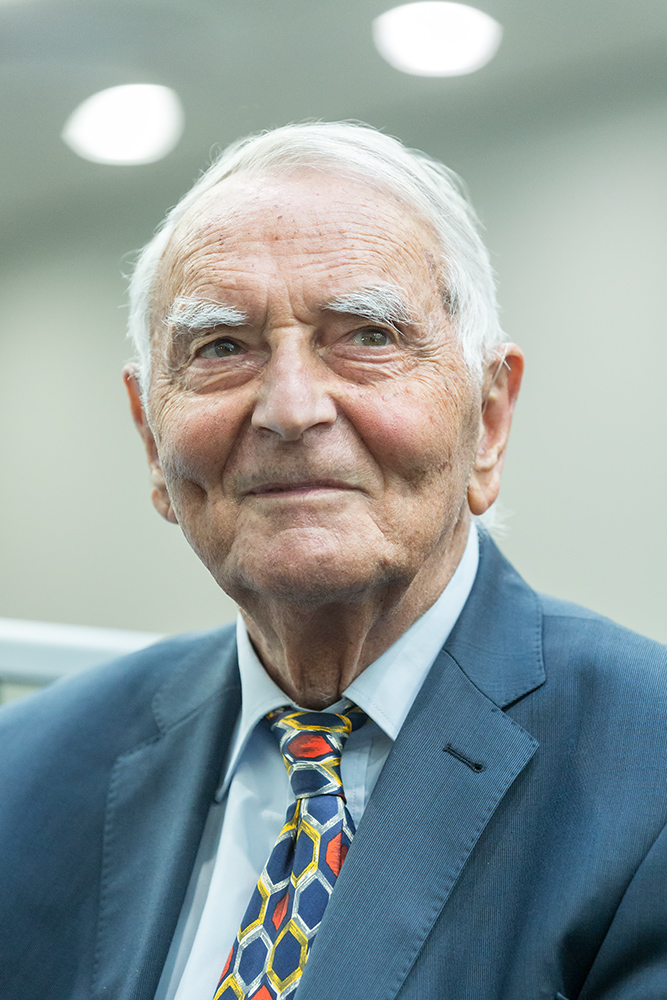
Professor Jules Angst, a pioneering Swiss psychiatrist and one of the most influential figures in the modern understanding of mood disorders, died at the age of 99. His work fundamentally shaped contemporary concepts of depression and bipolar disorder and left a lasting impact on psychiatric research and clinical practice worldwide.
Born in Zurich on 11 December 1926, Angst trained in the Zurich psychiatric tradition at Burghölzli Hospital, within an academic environment shaped by figures such as Eugen Bleuler and Manfred Bleuler. This foundation in clinical observation and long-term psychiatric follow-up informed his lifelong scientific approach.
He served as Professor of Clinical Psychiatry at the University of Zurich and led research at the Psychiatric University Hospital Zurich. Over several decades, he developed and directed major longitudinal and epidemiological studies of mood disorders, most notably the Zurich cohort studies. These workstreams provided some of the most extensive long-term data available on affective illness, clarifying patterns of course, recurrence, and outcome across the lifespan.
His research was central to the evolving understanding of mood disorders, contributing both to the consolidation of the distinction between unipolar and bipolar conditions and to later frameworks that emphasized spectrum-based conceptualisations. More broadly, his work helped establish longitudinal epidemiology as a cornerstone of modern psychiatric research and influenced the way diagnostic boundaries in mood disorders are studied and debated.
Professor Angst authored and co-authored hundreds of scientific publications and became one of the most cited researchers in psychiatry. His scientific contributions extended across psychiatric epidemiology and treatment research, including work on pharmacological interventions for mood disorders, as well as population-based studies of psychiatric illness.
He received numerous international honors in recognition of his contributions, including the Jean Delay Prize in 2017. He also held prominent leadership roles within European psychiatry, serving as Chair of the Section of Epidemiology and Social Psychiatry of the European Psychiatric Association from 1992 to 1996 and as President of the Association from 1997 to 1998.
Professor Angst remained intellectually active well into later life, continuing to engage with research and academic discourse over many decades. His work helped define a more empirically grounded and nuanced understanding of mood disorders that continues to inform psychiatric research and clinical practice.
He leaves behind a scientific legacy defined by rigorous longitudinal investigation and a sustained commitment to understanding the complexity of affective illness.
Our thoughts are with his family and friends.


 248
248