At least 20% of people aged 55 and more may suffer from mental health conditions. Somatic diseases are also important factors in breaking an already fragile psychic balance. Mental disorders can exacerbate the symptoms and functional disabilities associated with medical illnesses and increase the overall cost of care.
Mental health conditions can have a significant impact on an older adult's ability to carry out the basic activities of everyday life and to reduce the person’s independence, autonomy and quality of life. Unfortunately, mental health conditions are not often diagnosed and treated. Many older adults struggle without proper help, or simply without any help at all.
There are many prejudices about the meaning of mental illness. Many older adults today still see mental illness as a sign of weakness and are unlikely to admit their difficulties. In addition, symptoms of dementia and depression are too often considered as part of normal aging.
Despite the significant and increasing number of well-prepared professionals, a well-developed body of knowledge, and a large number of caregivers, it is becoming more and more difficult to persuade the authorities to invest in the overall older adults’ mental health. The distribution of skilled mental health resources for caring older adults among the different regions of the world and income groups is significantly uneven and, in many countries, they are even scarce.
In this context, the absence of a comprehensive policies and targeted programs for the older adults’ mental health is not surprising. Despite the improvement in educational programs, the recruitment of new human resources to work in favor of the older adults’ mental health is becoming increasingly difficult. The organization of services for older adults suffering from mental disorders needs vast improvement.
The WPA Section of Old Age Psychiatry has been very active in improving the knowledge in this area and in advocating a better mental health for older adults around the world.
To promote the discipline of Old Age Psychiatry within the framework of WPA by:
1. ensuring that WPA Executive Committee and the Board are well informed of old age psychiatry issues,
2. organizing symposia and workshops at WPA congresses,
3. collaborating with other international organizations with similar interests and participating in major international meetings relevant to the discipline,
4. developing and disseminating educational material for practitioners in the field, and
5. providing technical support to relevant national organization and WPA members.




Here you can find the latest news from the Section Old Age Psychiatry:
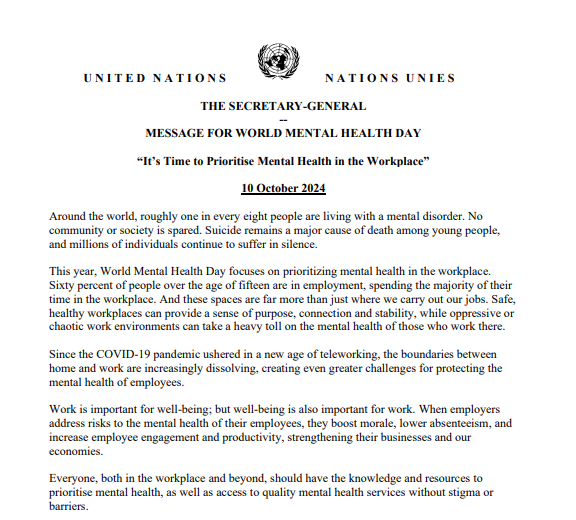
As part of World Mental Health Day 2024, SOAP actively participated in the UN Secretary General's World Mental Health Campaign "It’s Time to Prioritise Mental Health in the Workplace” by organising, with other colleagues, a webinar that took place on the 3rd of October, titled "Work for All Ages: Embracing Diversity, Driving Growth".
The webinar included speakers from:
- International Psychogeriatric Association
- World Federation for Mental Health
- International Labor Organization
- International Longevity Centre

Venue: Faculty Club, Leuven, Belgium Date: 24th-26th September 2026 Which Language: EnglishIntensive refresher course in Old Age Psychiatry
Event: A 3 day CME accredited course organised by the European Association of Geriatric Psychiatry
Organised by the European Association of Geriatric Psychiatry, this three-day refresher course aims to strengthen geriatric psychiatry training across Europe by offering in-depth topic reviews, guided case discussions, and updates on the latest clinically relevant research in old age psychiatry.
Organised by:
The European Association of Geriatric Psychiatry
Read more about the course here
Download the registration form here
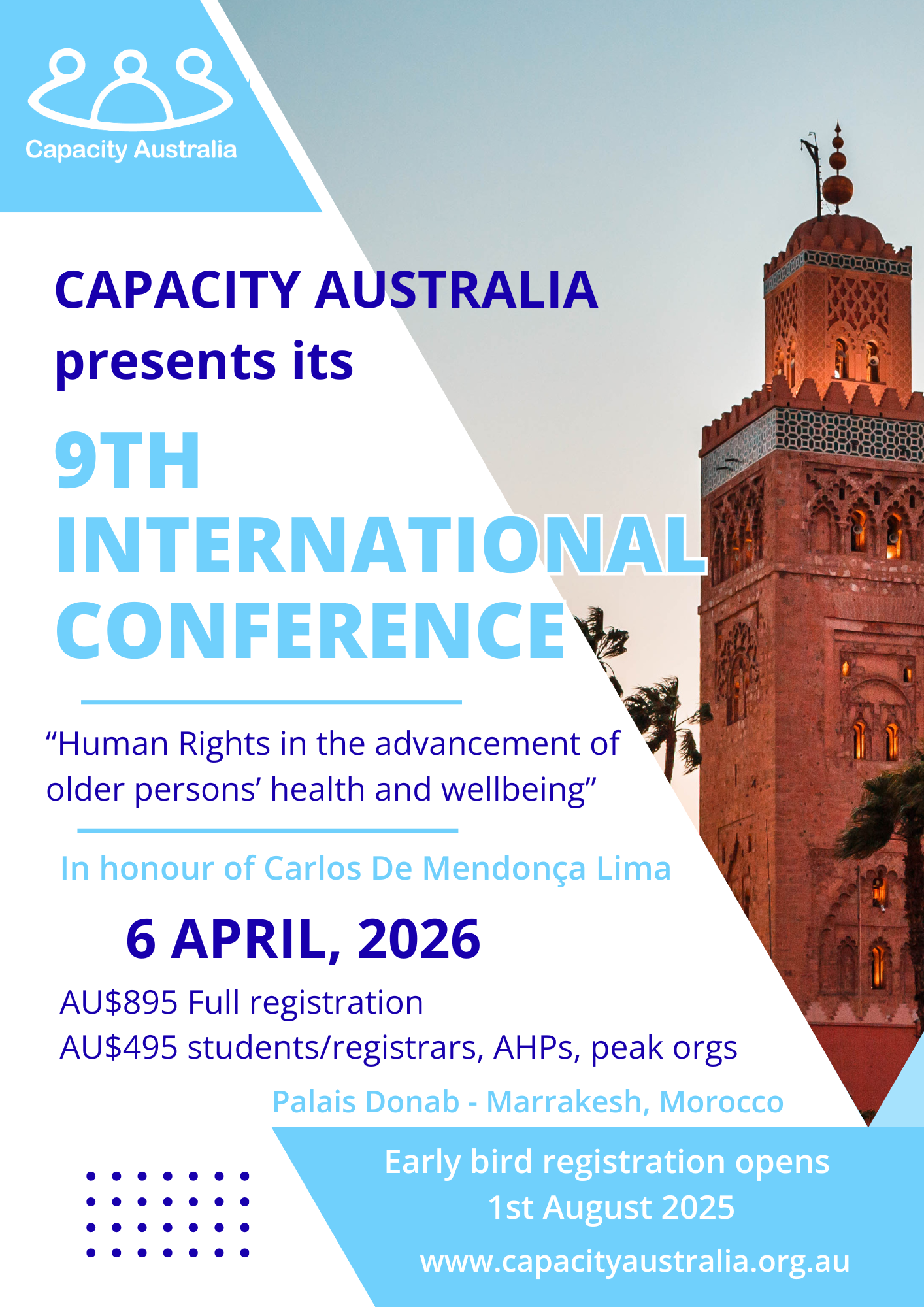
Venue: Palais Donab – Marrakesh, Morocco Date: 6th April 2026 More information can be found hereCapacity Australia 9th International Conference